
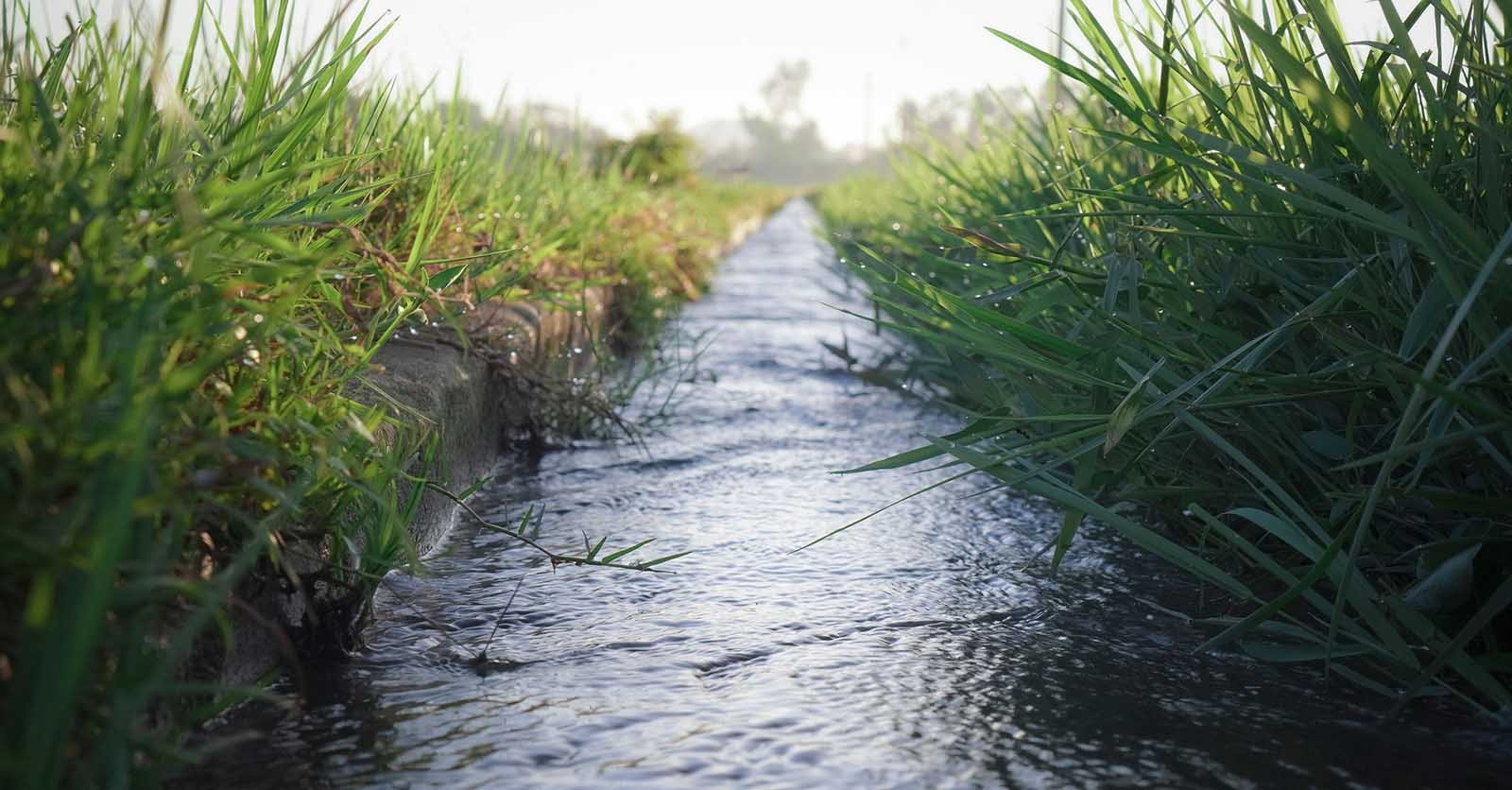
Wheat First Irrigation at CRI in Pakistan: Timing, Water & Urea Dose
If your wheat was sown in the first three weeks of November, one date matters more than any other in the next month: the first irrigation. In Punjab’s wheat sowing guide, this watering is listed first for a reason — at crown-root initiation (CRI), 20–25 days after sowing, it is, in the guide’s own words, “the most critical irrigation, never skip it”. Get it right and the crop sets the roots and tillers that carry the whole season. Miss it, and no later watering fully makes up for it.
What CRI Actually Is
CRI is the stage, roughly three weeks after sowing, when the young wheat plant starts forming its crown roots — the second, permanent root system that grows from the base of the plant, just below the soil surface. The first seed roots got the plant started. The crown roots are what feed it for the rest of the season.
That is why water at this stage does so much work. Dry soil at CRI means fewer crown roots, weaker tillering, and a plant that cannot take up fertilizer properly even if the fertilizer is in the soil. If you have only one irrigation available all season, extension guidance is clear: spend it here.
When to Irrigate: Count Days From Sowing, Not From the Calendar
For timely-sown, irrigated wheat in Punjab, give the first irrigation 20–25 days after sowing. Work it out from your own sowing date:
- Sown 5 November → CRI watering 25–30 November.
- Sown 10 November → CRI watering 30 November – 5 December.
- Sown 20 November → CRI watering 10–15 December.
Two exceptions matter in Punjab. First, on fields vacated by paddy, the Punjab Agriculture Department has advised a later first watering, about 30–40 days after sowing, because those soils hold more residual moisture. Second, in a cold spell or with very late sowing, CRI can slip a few days later — but do not let that become an excuse to wait a full canal rotation past the window if tubewell water is available.
Practical tip for canal-irrigated fields: check your warabandi turn now, before the window opens. If your turn falls a few days before day 20, take it; a day or two early is far better than a week late. If your turn falls after day 25, plan a tubewell top-up rather than waiting for the next rotation.
How Much Water, and How to Give It
Give one full, level irrigation — enough to wet the root zone evenly across the field, not a light sprinkle and not water standing for days. General wheat irrigation guides describe a full irrigation at about 5–7 cm depth; the exact depth on your field depends on soil type and how level the field is, so use that only as a guide to what “full” means, not as a precise prescription.
- Level first. An unlevel field drowns the low end and starves the high end at the same time. Laser-levelling, covered in the sowing guide, pays for itself at CRI more than at any other watering.
- Irrigate in the morning where you can, and avoid leaving the field waterlogged in heavy soil. Standing water for days does the roots no good either.
- Do not count a light rain as the CRI irrigation unless it genuinely wets the root zone. A shower that only wets the top centimetre does not reach the crown roots.
- Light soils need watching sooner than heavy soils. If your light field is drying fast at day 18–19, irrigate at the early end of the window.
Urea at CRI: The Second Half of the Nitrogen
Urea at CRI is not an extra dose on top of everything else. It is the second half of the season’s nitrogen.
The sowing guide’s split is half the nitrogen at sowing and half with the first irrigation, and extension advisories say the same: the remaining half dose of urea should be given at CRI, after irrigation. In bag terms, the pattern most commonly published for Punjab works out to about 1 to 1.25 bags of urea (50 kg bag) per acre at CRI, broadcast evenly on moist soil once the irrigation water has soaked in.
Three method points decide whether that urea works or is wasted:
- After water, not before it. Broadcast on moist soil after irrigation so the urea dissolves into the root zone. Urea broadcast on dry soil in hot sun loses nitrogen to the air.
- Evenly, not in heaps. Uneven broadcasting gives streaks of over-fed and under-fed plants, and the under-fed strips tiller poorly.
- Only as the remainder. If you already gave a large urea dose at sowing, do not add a full CRI dose on top of it. The CRI dose is what is left of your seasonal nitrogen. A soil test, or your local Agriculture Extension office’s advice for your field’s fertility, is the only way to be exact — weak soils need more than good soils, and the draft’s bag figure is a common pattern, not a prescription for every field.
For current bag prices before you buy, see the October 2026 fertilizer prices — urea was running about Rs. 4,435–4,750 per 50 kg bag depending on brand, and dealer prices rise during peak sowing demand, so confirm with your local dealer.
If You Missed DAP or Potash at Sowing
Do not wait until tillering to fix a missed basal dose. The Punjab advisory for farmers who missed nitrogen, potash and phosphorus at sowing is to apply them at the first watering. As a guide from that advisory, weaker land was given 2 bags of DAP (or 5 bags of single super phosphate) per acre at first water, halved on good land, with average land at 1.5 bags of DAP (or 4 bags of SSP). If that is your situation, talk to your extension office about your field before CRI, so the fertilizer is ready when the water goes on.
What Happens If CRI Irrigation Is Delayed or Urea Is Skipped
Delay is not free, and the loss is not recovered by watering extra later. Advisory figures give a sense of scale, not a promise for any one field: about 80–120 kg less grain per acre for each week of delay past CRI in extension figures, and the Punjab department has warned that leaving the crop water-stressed at crown-root formation can cost far more — up to about 39% in its advisory warning — because tiller numbers are set at this stage.
Skipping the CRI urea dose has a quieter but similar effect. The plant may look green enough from residual soil nitrogen, but tiller numbers stay low, and fewer tillers means fewer grain-bearing spikes at harvest, whatever you do at booting or grain-filling. Those later irrigations — tillering at 35–45 days, jointing/booting at 55–70 days, flowering and grain-filling at 80–100 days in the sowing guide — matter, but they build on the root system and tillers CRI creates. They do not replace it.
CRI Checklist — Do This in the Window
- Mark your CRI dates now from your sowing date (20–25 days after sowing; 30–40 days after paddy-vacated fields).
- Confirm your warabandi turn or tubewell booking so it falls inside the window.
- Level-check the field; fix low and high spots before water goes on.
- Have the CRI urea ready (about 1 to 1.25 bags per acre as the second half of your nitrogen, adjusted for what you applied at sowing and your soil test).
- Irrigate one full, even watering; broadcast urea on moist soil after the water has soaked in.
- If DAP or potash was missed at sowing, apply it at this watering, not later.
- After CRI, plan the next watering at tillering (35–45 days) — do not let the field dry out again while tillers are forming.
One winter-planning note for dairy farmers: CRI week often overlaps with the first barseem cuttings in December. If wheat and barseem share the same water turn, plan the turns for both crops together in late November, so neither crop’s critical watering is pushed back by the other.
Frequently Asked Questions
When is the first irrigation for wheat in Punjab?
At crown-root initiation, 20–25 days after sowing for timely-sown irrigated wheat. For example, wheat sown on 10 November needs its first irrigation between 30 November and 5 December. Fields vacated by paddy are an exception, at about 30–40 days after sowing.
How much urea should I apply at CRI?
As the second half of the season’s nitrogen, about 1 to 1.25 bags of urea (50 kg) per acre is the commonly published pattern for Punjab, broadcast on moist soil after irrigation. It is the remainder of your seasonal nitrogen, not an extra dose — adjust it for what you applied at sowing and for your soil’s fertility, and confirm with your local extension office if you are unsure.
Should urea go on before or after the CRI irrigation?
After. Broadcast it on moist soil once the irrigation water has soaked in, so it dissolves into the root zone. Urea on dry soil in hot sun loses nitrogen to the air.
What if my canal turn comes after day 25?
Do not wait a full rotation if you can avoid it. A tubewell top-up inside the window is better than a week-late canal watering, because each week of delay past CRI costs roughly 80–120 kg per acre in extension figures.
Can a later irrigation make up for a missed CRI watering?
No. Later waterings at tillering, booting and grain-filling help, but tiller numbers and crown-root development are set at CRI. A missed CRI irrigation reduces the crop’s ceiling for the whole season.